


Synthetic Biology
ΒΒ5706 | Theory: 2 hours/week
Lectures in the English language are offered to Erasmus students
COURSE NOT OFFERED IN THE ACADEMIC YEAR 2026-2027
Learning outcomes
Synthetic Biology aims to design and construct new biological systems that do not naturally exist and that exhibit novel characteristics and functions. At a fundamental level, Synthetic Biology breaks down biological processes—such as the production of a protein from a gene—and then reconstructs their components to create a new system with a specific, engineered function. In other words, Synthetic Biology seeks to build living systems from the ground up and endow them with new capabilities. In doing so, it contributes both to a deeper understanding of the principles of biology and to the development of high-value products, such as low-cost microbial drugs, bacteria that generate energy or detoxify hazardous environmental waste, or programmable microbes that locate and destroy tumors, among many others. This introductory course focuses on both the foundational concepts of this emerging discipline and its applications.
Syllabus
The course includes lectures covering the following topics:
- Basic concepts in Biological Engineering
- Foundational Technologies
- The minimal cell and synthetic life
- Parts, devices and systems
- Modeling of synthetic biological systems
- Applications of engineered biological systems
- iGEM
- Social/bioethical implications and educational dimensions of Synthetic Biology, including relevant teaching approaches and Teaching Practicum (design and presentation of teaching scenarios and/or microteaching in simulated conditions).
Student performance evaluation
Student performance is evaluated through:
- Attendance of lectures (A)
- Participation in discussions during lectures (P)
- Literature-based assignment on a selected topic (L)
- Written examination
Final grade (F) = 0,2×A + 0,2×P + 0,6×L
If F<5 written exam is required
If F>5 written exam may improve final score.
Suggested bibliography
- Συνθετική Βιολογία – Βασικές αρχές, Baldwin G, Bayer T, Dkckinson R, Ellis T, Freemont PS, Kirney RI, Polizzi K, Stan G-B. ISBN: 978-618-5173-26-5 (Κωδικός στον Εύδοξο: 68403717)
- Bedau, Mark A., Cleland, Carol (Ed.) (2010), The Nature of Life: Classical and contemporary perspectives from philosophy and science. Cambridge University Press
- Rollin, Bernard E. (2006), Science and Ethics. Cambridge University Press
- Schmidt, M, Kelle A., Ganguli-Mitra, A., de Vriend, H. (Ed.) (2009), Synthetic Biology: The Technoscience and Its Societal Consequences. Springer
Teaching Material / E-class
Lecturers
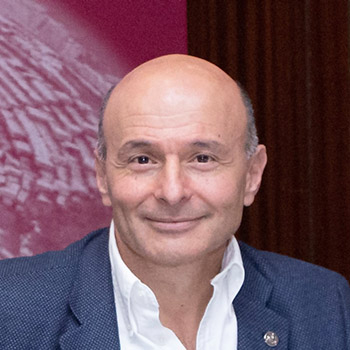
Kostas Mathiopoulos (Course Coordinator)
Kalliope Papadopoulou (Course Coordinator)
