

Human Physiology

ΒΒ0204 | ECTS: 6
Theory: 4 hours/week | Practicals: 2 hours/week
Learning Outcomes
With the successful completion of the course, the student will:
- have understood the basic concepts concerning the structure and function of the main systems of the human body
- have acquired knowledge of the tools and techniques used to study the systems of the human body
- be able to solve complex problems in Human Physiology
Analytical Description of the Course
- NERVOUS SYSTEM. Structure of the nerve cell. Membrane potential – action potential – conduction of the nerve impulse. Synapses between nerve cells. Excitatory and inhibitory chemical neurotransmitters.
- NERVOUS SYSTEM. Structure and function of the brain.
- NERVOUS SYSTEM. Structure and function of the spinal cord.
- NERVOUS SYSTEM. Autonomic nervous system. Parasympathetic and sympathetic nervous system.
- CIRCULATORY SYSTEM. Blood. Formed elements of the blood. Mechanism of blood coagulation.
- CIRCULATORY SYSTEM. Cardiac cycle. System of generation and conduction of excitation in the heart.
- CIRCULATORY SYSTEM. Arterial pulse, venous pulse. Blood pressure
- CIRCULATORY SYSTEM. Lymphatic system.
- RESPIRATORY SYSTEM. Anatomy of the respiratory system. Mechanics of breathing. Gas exchange and transport. Control of respiration.
- MUSCULAR SYSTEM. Structure of skeletal muscles. Molecular basis of skeletal muscle contraction. Metabolism of skeletal muscles and types of muscle fibers.
- ENDOCRINE SYSTEM. Classification of hormones based on their chemical structure. Hormones of the hypothalamic–pituitary axis.
- ENDOCRINE SYSTEM. Hormones of the thyroid gland. Hormones of the parathyroid glands. Regulation of calcium ion concentration in blood plasma.
- ENDOCRINE SYSTEM. Hormones of the adrenal glands. Secretion of hormones related to stress.
- ENDOCRINE SYSTEM. Hormones of the pancreas. Regulation of insulin secretion. Hypoinsulinism and hyperinsulinism (diabetes mellitus).
- REPRODUCTIVE SYSTEM. Male reproductive system. Physiological role and regulation of androgen secretion. Female reproductive system. Physiological role and regulation of estrogen secretion.
- EXCRETORY SYSTEM. Kidneys (anatomy, function, basic processes). Glomerular filtration, tubular reabsorption, tubular secretion. Excretion of substances in the urine and plasma clearance. Fluid balance and acid–base balance.
Laboratory Exercises
The purpose of the laboratory exercises is to examine functions of the muscular, respiratory, and circulatory systems. Within this framework, students will study:
- Muscle fatigue.
- Patellar (knee-jerk) stretch reflex.
- Measurement of arterial blood pressure.
- Measurement of electrocardiogram (ECG) at rest and after exercise.
- Measurement of respiratory volumes using a spirometer at rest and after exercise.
- Determination of the respiratory quotient.
Assessment
Method of assessment of theory: Written examination consisting of short-answer questions, multiple-choice questions, and judgment/critical-thinking questions that require integrative thinking and problem solving.
Method of assessment of laboratory exercises: Report writing.
Successful completion of the laboratory examination is required for the course grade to be awarded and contributes 5% to the final grade.
The total number of correct answers corresponds to 100 points, which are converted to a grade of 10.
Reading Suggestions
- Introduction to human physiology (Sherwwod, Basdra editions)
- Medical Physiology (Guyton, Parisianos editions)
Teaching Material / E-class
Lecturers
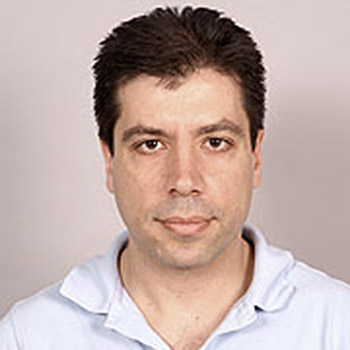
Dimitrios Stagos(Course Coordinator)