Microbiology

ΒΒ0301 | ECTS: 4
Theory: 4 hours/week
Learning Outcomes
The aim of the course is to introduce students to the basic concepts and principles of Microbiology, in order to understand the importance of microorganisms in health, biotechnology, food industry and agriculture as well as in the sustainability of our planet.
Upon completion of the course, students are expected to:
- understand the basic concepts and principles of microbial biology, including structure, function, metabolism, and genetics
- understand the role and manipulation of microorganisms in molecular biology
- understand the relationships between micro-organisms and infectious diseases and their importance in biotechnology
- have acquired a basic knowledge of the huge microbial diversity.
Analytical Description of the Course
- Introduction
This section provides a historical overview of microbiology. - Microbial cell structure
In this module students are taught the structure and composition of a microbial cell, the basic differences between Gram-positive and Gram-negative cells, as well as between prokaryotic and eukaryotic cells. - Molecular Biology of Microorganisms
The processes of replication, transcription and translation of microorganisms are described. The main differences of these processes between prokaryotic and eukaryotic microorganisms are further described. - Growth and development of micro-organisms
This section deals with the essential nutrients for the growth of microorganisms and the sources of these nutrients both in their natural habitat and in a laboratory culture. In addition, the two different types of culture (closed – open) are examined and the growth kinetics of these cultures are described. - Bioenergetics
In this module students are taught about the mechanisms that take place in a microbial cell to produce energy (e.g. protonmotive force, ATP synthesis) the biosynthesis of basic macromolecule monomers and metabolism concepts. Moreover, the diverse types of microorganisms according to the source of energy and the source of organic and inorganic compounds are described. - Bacterial Genetics
In this module students are taught the importance of mutations and genetic recombination, the isolation and use of mutants in the study of gene function, the mechanisms of genetic material exchange among prokaryotes, as well as classical and modern techniques and methodologies for the study of both genes and whole microbial genomes. - Prokaryotic Diversity
Students in this module are introduced to microbial taxonomy and study important prokaryote phyla (bacteria and archaea) for agriculture, geochemical cycles, health, biotechnology as well as sustainable agriculture and food production. - Eukaryotic Diversity
Students in this module study important eukaryotic microbial cells (yeasts, fungi, microalgae). The structure and different functions of eukaryotic cells are described. - Introduction to Virology
The basic differences among viruses and other microorganisms are described. In addition, the structure of the virion, the different types of viral genomes and classification according to their genome are described. Moreover, an overview of phages is provided. - Molecular Biology of Viruses
The replication cycle of a virus is examined, describing the main steps that make up the cycle, from binding and entry into the host cell to its final release. In addition, the different modes of expression and regulation of a viral genome depending on the form of the virus are described.
Assessment
Student performance is assessed by a written examination during the official exam period.
Written examination might include:
– Open answer questions
– Multiple-choice questions
– True or false questions
– Matching parts of sentences to form complete phrases
– Targeted questions requiring one-word or short and precise answers
The total points of correct answers is 100, which corresponds to a maximum mark of 10 (passing mark 5).
Reading Suggestions
- Prescott Microbiology (Willey, Sandman, Wood)
- JAWETZ, Medical Microbiology
- BROCK Biology of microorganisms, Μ. Μadigan, J. Martinko, J. Parker
Teaching Material / E-class
Lecturers
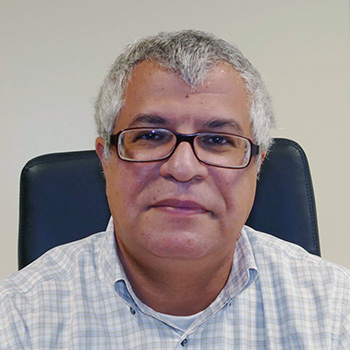
Dimitrios Mossialos(Course Coordinator)