


Cell Biology

ΒΒ0201 | ECTS: 6
Theory: 3 hours/week | Practicals: 2 hours/week
Learning Outcomes
The purpose of this course is to give students a concise, yet accurate, presentation of the basic concepts of Cell Biology, incorporating, where possible, recent scientific discoveries. Upon completion of the course, students are expected to:
- know and be able to describe how the cell functions, how it maintains its structure, how it communicates with its environment, how it reproduces and finally how it dies
- determine the subcellular location of individual cellular functions
- distinguish and explain the basis of cellular organization and cellular differentiation
- identify deviations in the structure and function of the cell that result into pathological conditions
Analytical Description of the Course
- The cell boundaries are defined by the plasma membrane – How the structural components of the plasma membrane serve its function – Membrane cytoskeleton – Cell polarity and membrane domains – Cell walls and extracellular matrix – Membrane structures that serve intercellular interactions
- Transmembrane transport: principles and limitations – the resting potential of the membrane in eukaryotic and prokaryotic cells – Subcellular localization of membrane transporters and coordination of their function – transmembrane transport in polarized cells – transmembrane transport in cell movement, nervous function, hearing and respiration.
- The cytoskeleton and cell movement – Dynamics of the assembly of actin filaments, microtubules and intermediate filaments – Intracellular movements through the cytoskeleton – the role of the cytoskeleton in cell division, intercellular communication and the formation of cilia and flagella.
- Cell signaling – types of intercellular signaling – signaling pathways and networks – Feedback and dynamics of signaling
- Organization and function of mitochondria- The genetic system of mitochondria – Semi-autonomy and origin of mitochondria – Biogenesis of mitochondria – Protein import and assembly of mitochondria – Fusion and fission of mitochondria- Mitophagy and aging.
- Structure and function of chloroplasts- Genetic composition of chloroplasts – Biogenesis of plastids and chloroplasts – Import and targeting of proteins to the chloroplast.
- Endoplasmic reticulum (ER): Protein synthesis on bound ribosomes – Folding and maturation of proteins – Retention and export of proteins from the ER- Mechanisms of protein segregation and targeting.
- Structure and compartmentalization of the Golgi apparatus – Functions of the Golgi apparatus – Types of transport vesicles – Vesicular transport.
- Cellular secretion: Types of cellular secretion – Secretory vesicles – Stages of the secretory process.
- Lysosomes: Morphology of lysosomes – Synthesis of lysosomal proteins – Categories of lysosomes – Functions of Lysosomes – Phagocytosis – Pinocytosis – Endocytosis.
- Peroxisomes: Morphology and functions – Targeting and import of proteins into peroxisomes.
- Nucleus: Structure and DNA hierarchical packaging – Nuclear envelope, nuclear lamina, nuclear pores – Nucleolus.
- Cell division: Cell cycle – Mitosis, meiosis and genetic diversity.
- Cell cycle regulation: Cyclin-dependent kinases and MPF – Major checkpoints of the cell cycle.
- Apoptosis: Cellular morphology – Role and regulation of caspases – Extracellular and intracellular apoptosis activation pathway.
Laboratory Exercises
- Cell membrane permeability – Water movement across the cell membrane.
- Cellular fractionation.
- Stereology.
- Mitosis – meiosis.
- Study of specific Cell Biology topics from english literature and poster presentation.
Student Performance Evaluation
Students’ performance is assessed based on the group project (20%) and the written exam in the theoretical part of the course during the examination period (80%).
The written exam includes:
• open-ended questions (50-60 points)
• statements that the students must decide whether they are true or false (20 points)
• targeted questions that require short and precise answers (20 points)
The total points of the correct answers correspond to 100 points, which are reduced to a grade of 10. Based on this reduction, each student’s grade in the theoretical examination of the course is calculated. This grade corresponds to 80% of the total course grade.
Suggested Bibliography
- The Cell: A Molecular Approach 8th Edition, by Geoffrey Cooper, OXFORD UNIVERSITY PRESS
- Molecular Biology of the Cell, by Bruce Alberts, 7th Edition, John Wiley & Sons
- Molecular Cell Biology by Harvey Lodish, 9th Edition, W. H. Freeman
Teaching Material / E-class
Lecturers
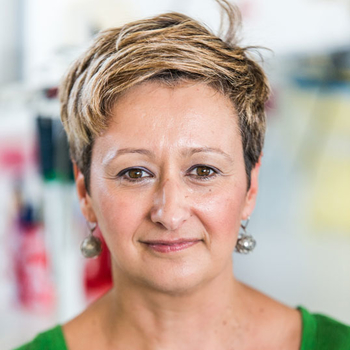
Katerina Μoutou (Course Coordinator)
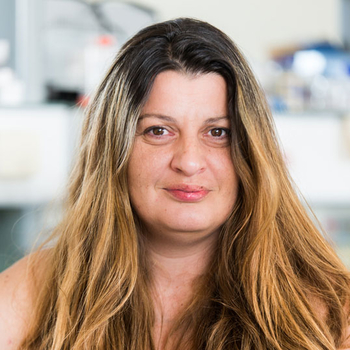
Theologia Sarafidou