


Biochemistry of Proteins and Nucleic Acids

Theory: 4 hours/week | Tutorials: 2 hours/week | ECTS Units: 5
Learning outcomes
The aim of this course is to provide students with a detailed description of the biosynthesis of nucleotides, amino acids and cell membrane lipids, i.e. the building blocks of major biological macromolecules. The pathways of DNA replication, recombination and repair, the synthesis and splicing of RNAs and proteins are then analysed. Finally, gene expression and its regulation, as well as its importance in the evolution and response of cells and organisms to external and environmental changes, are presented in detail.
Upon completion of the course, students are expected to:
- know and be able to describe how the biosynthesis of amino acids, fatty acids, cell membranes and nucleotides is carried out and regulated in the cell.
- know the process of DNA replication and the mechanisms of DNA repair and recombination.
- know the DNA transcription pathways, i.e. the biosynthesis of RNA in prokaryotic and eukaryotic organisms, and the mechanisms of RNA processing and regulation, and the mechanisms of RNA splicing.
- know the process and regulation of protein biosynthesis.
- be familiar with the mechanisms of control of gene expression in prokaryotic and eukaryotic organisms
Analytical Description of the Course
- Fatty acid composition
- Elongation and desaturation of fatty acids
- Synthesis of Eicosanoid Hormones
- Lipid synthesis: storage lipids, phospholipids and cholesterol
- Cholesterol synthesis
- Regulation of cholesterol synthesis
- Transport of lipoproteins, triacylglycerols and cholesterol
- Synthesis of steroid hormones
- Amino acid biosynthesis (nitrogenase complex, nitrogen fixation, transport of activated monocarbon groups by tetrahydrofolate)
- Photosynthesis
- Targeting and degradation of proteins
- Post-synthetic modification of eukaryotic proteins
- Glycosylation of proteins for targeting
- Signal sequences for protein targeting
- Introduction of proteins into cells (endocytosis)
- Ubiquitination and proteasome
- Amino acid degradation pathways
- Amino acid oxidation and urea production
- Nitrogen excretion and the urea cycle
- Summary of nitrogen metabolism
- Carbohydrate synthesis
- Nucleotide and deoxyribonucleotide biosynthesis and its regulation
- Genes and chromosomes (chromosome elements, DNA superfolding, chromosome structure)
- Replication of DNA, DNA structure, DNA polymerases and replication factors, initiation, elongation and termination
- DNA repair mechanisms and recombination
- RNA biosynthesis and its regulation in prokaryotes organisms, cis regulatory elements and active transcription factors, RNA polymerase, RNA chain elongation, transcription termination
- RNA biosynthesis in eukaryotes, RNA forms, cis and trans regulatory elements and active trans factors, RNA polymerases, mechanisms of initiation, elongation, termination and regulation of RNA biosynthesis
- Eukaryotic processing RNA modifications, stability and mechanisms of RNA degradation
- Biosynthesis of proteins, genetic code, components of the protein biosynthesis pathway, initiation, elongation, termination and structure completion, cellular localization and protein targeting
- Regulation of gene expression
- Principles and techniques for studying gene expression, RNA and protein stability
- Control of gene expression in bacteria, organization in operons, riboswitches
- Control of gene expression in eukaryotes, role of chromatin structure, regulatory RNA and messenger molecules, influence of environment
Student performance evaluation
Performance in the course is assessed on the basis of the written examination in the theoretical part of the course during the examination period (100%). Students who present a paper receive one additional point in their performance in the written examination if their grade is greater than or equal to fifty units.
The written examination includes: free development questions (50-60 units), sentences that the student must decide whether they are right or wrong (20 units), targeted questions requiring short and precise answers (20 units)
Suggested bibliography
- Biochemistry Fundamentals (2015). J.L. Tymoczko, J.M. Berg, and L. Stryer, 3rd edition, Broken Hill Publishers.
- Biochemistry (2021). Raymond S. Ochs., 1st ed.
- Lehninger’s Fundamentals of Biochemistry (2017). D.L. Nelson and M.M. Cox, 7th edition, Broken Hill Publishers.
- Biochemistry Fundamentals at the Molecular Level (2018). D. Voet, J.G. Voet and C.W. Pratt, 5th edition, Giola Publishers.
Teaching Material / E-class
Lecturers
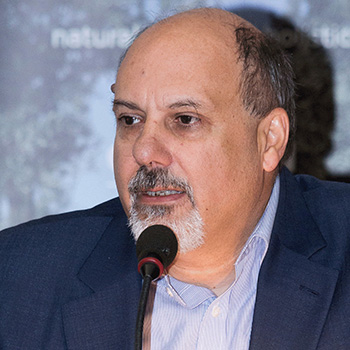
Demetres Leonidas D.
(Course Coordinator)