



Applied Microbiology
Theory: 2 hours/week | ECTS Units: 4
Tutoring in the English language is offered to Erasmus students
Learning Outcomes
The aim of the course is to introduce students to the basic principles implemented in applied microbiology using both classical and molecular approaches in an extremely rapidly developing field with applications in medicine, pharmaceuticals, environment, and food industry.
Upon successful completion of the course, students will be able to:
Understand and have the theoretical background for the use of basic techniques for the detection and identification of microorganisms and their development from small laboratory cultures to industrial scale.
Understand the concepts of microbial genomics and epigenomics and their usefulness in the field of applied microbiology.
Understand the interactions between humans and microbes and the role of the human microbiome in various organ systems.
Have the theoretical background for the use of microorganisms on an industrial level with applications in medicine, pharmacy, food microbiology, and the environment.
Analytical Description of the Course
Classic and New Techniques in Applied Microbiology
In this section, students learn the basic molecular techniques used in a Microbiology-Virology laboratory. Techniques for the detection, identification, and quantification of microorganisms.
New Approaches in Microbial Genomics and Metagenomics
In this module, students are introduced to new techniques in the field of microbial genomics and metagenomics and other -omics technologies, as well as their usefulness in the field of microbiology. In particular, they learn about microbial genome mining and the discovery of secondary metabolites, with reference to the example of non-ribosomal peptides and polyketides with applications in medicine.
Principles of large-scale microbial growth
In this section, students are first taught the basic concepts of microbial growth and kinetics in closed and open systems, as well as methods for converting a small-scale laboratory culture to an industrial scale for the production of products in the fields of drug production, food biochemistry, and the environment.
In addition, in this section, students learn about the essential molecular tools regarding microbial genetic modification in order to improve the production of the final biotechnological product.
Applications of microbiology in industry
This section presents the applications of microorganisms at the laboratory and industrial level in:
• Health
Students learn about the human microbiome in various organ systems. In addition, they learn about infectious agents and microbial pathogenesis and the general role of microorganisms in human health. This section also refers to the toxins of pathogenic microorganisms and methods for their detection.
• Pharmaceuticals
Students learn about the use of microorganisms in the production of medicines.
• Food Industry
Students learn about the use of microorganisms themselves or their derivatives in the food industry, as well as methods and techniques for removing pathogenic microorganisms from food.
• Agriculture
Students learn about the interactions between plants and microorganisms and about plant pathogens.
Principles of applied virology
In this section, students learn the basic principles of virus cultivation. They are first taught the basic concepts and techniques of cell culture, with a view to using them for the multiplication, identification, and processing of viruses.
In addition, students learn the classic and newer techniques and methodologies used for the detection and identification of viruses, as well as their phylogenetic analysis. This section also discuss the use of viruses in biotechnology as vectors and emphasizes on the use of viruses for vaccine production.
Student Performance Evaluation
Performance in the course is assessed by means of a written examination in Greek and a successful oral presentation of a research topic, also in Greek.
During the written examination, students are assessed by means of: multiple-choice questions, short-answer questions, matching questions, and essay questions.
The final grade is calculated as 80% from the written exam and 20% from the presentation of a research topic.
Suggested Bibliography
- Prescott Microbiology (Willey, Sandman, Wood) 1st Greek Edition Broken Hill Publishers 2022
- Introduction to Microbiology (Tortora, Funke, Case) 2nd Greek Edition Broken Hill Publishers 2017
- BROCK Biology of Microorganisms, M. Madigan, J. Martinko, J. Parker, ITE-University of Crete Press, 2018.
- Microbial Biotechnology-A Laboratory Manual for Bacterial Systems, Surajit Das, Hirak Ranjan Dash, Springer India, 2015
Teaching Material / E-class
Lecturers
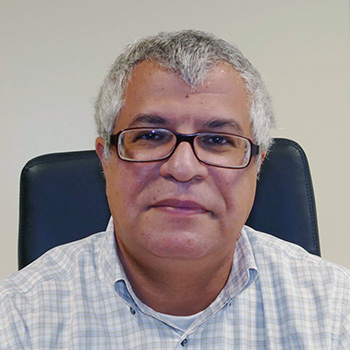
Dimitrios Mossialos (Course Coordinator)